
Mecklenburg-Vorpommern: Experience the Hanse and Störtebeker
Mecklenburg-Vorpommern has been shaped by water for centuries. Discover how the Baltic Sea, the Hanseatic League and seafaring form the region’s maritime identity.
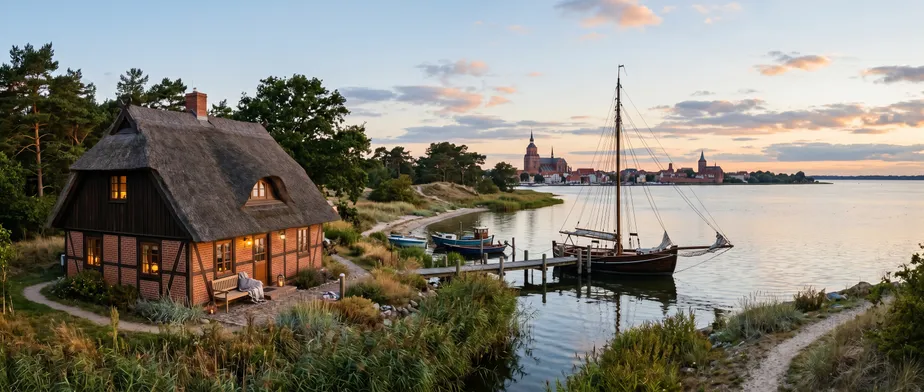
Mecklenburg-Vorpommern is a region best understood from the water. The Baltic Sea shapes its coastline, harbours and shipyards define many places, and rivers and lakes have long been part of everyday life further inland. Anyone who wants to understand the region cannot ignore its maritime history. It tells of trade, crafts, fishing and of legends that still resonate today.
Life along the coast in particular has been shaped by the sea for centuries. The sea was a transport route, a source of food and a workplace all at once. Inland waters also played an important role. People, goods and ideas often moved faster on water than on land. This created a close link between economic development and seafaring that still characterises Mecklenburg-Vorpommern today.
The Hanseatic League as an engine of the North
A central chapter of this history leads back to the Middle Ages. At that time, northern Europe was shaped by a powerful trade network: the Hanseatic League. Towns on the Baltic Sea benefited from their location and became key hubs for the exchange of goods. Harbours were not only transshipment points, but also places of prosperity, encounter and cultural change.
Hanseatic tradition can still be felt in Mecklenburg-Vorpommern today. It is visible in historic harbour towns, in brick Gothic architecture and in the sense of belonging to a long North German trading history. The maritime heritage here is not just a backdrop. It is part of the regional identity.
Between shipyards, fishing and tourism
Water remains a powerful economic factor today. The maritime industry, fishing and tourism all play their part. It is precisely this mix that makes the region special. Tradition and the present do not simply exist side by side, they are closely intertwined.
The shipyard in Warnemünde continues to play an important role in European shipbuilding. The locations in Stralsund, Wolgast and Wismar are also closely linked to international shipping. They stand for technical expertise, maritime experience and an industry that has shaped Mecklenburg-Vorpommern for generations.
At the same time, water is the main reason many visitors travel to the region. The proximity to the Baltic Sea, the harbours and the many inland waters create a landscape that offers both tranquillity and activity. Those who travel here experience in many places how closely everyday life, history and nature are connected.
Klaus Störtebeker and the power of legends
Where seafaring plays such a major role, stories emerge that outlast their own time. One of the best known figures in northern Germany is Klaus Störtebeker. His name still stands for adventure, defiance and the harsh world of seafaring. Whether historical person or legendary figure, his impact remains strong.
In Mecklenburg-Vorpommern, this legend finds particularly fertile ground. The region offers everything that keeps such stories alive: coastal towns with history, views of the open sea and a past in which trade and danger often lay close together. Störtebeker is therefore more than a familiar character from old tales. He is part of a maritime imagination that still accompanies the North today.
Why Mecklenburg-Vorpommern on the water still fascinates
Mecklenburg-Vorpommern shows how closely landscape and history can be connected. Water here is not just a natural setting, but a lifeline, an economic foundation and a stage for powerful stories. From the Hanseatic League and shipbuilding to the Störtebeker legend, a clear thread runs through the region.
This is what makes the maritime character of this state so compelling. Mecklenburg-Vorpommern is not a place where the water is only to be looked at. It is a region that lives with the water and has drawn its distinctive identity from it for centuries.
More articles

Experience Crane Season in Mecklenburg-Vorpommern
Around 150,000 cranes rest between the Baltic Sea and the lake district until the end of October. Why Mecklenburg-Vorpommern is now a special destination for nature observation.
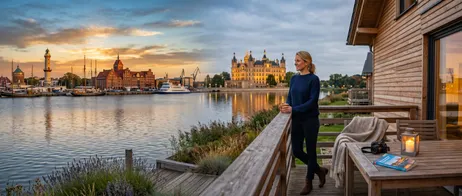
Rostock and Schwerin: Love-Hate, Rivalry and Unity
Rostock or Schwerin? This article shows what makes both cities unique and why their contrasts are exactly what gives Mecklenburg-Vorpommern its special appeal.

Experience the birdlife of Mecklenburg-Vorpommern in autumn
In autumn, Mecklenburg-Vorpommern becomes an important resting and wintering area for migratory birds. Experience cranes, wild geese and rare species and learn why the region is so important for bird conservation.

Discover Culinary Delights from Mecklenburg-Vorpommern
Discover culinary specialties from Mecklenburg-Vorpommern: from smoked eel and fresh fish to sea buckthorn
De Plattschnacker – Dialects in Mecklenburg-Vorpommern
Low German still shapes the language culture of Mecklenburg-Vorpommern today. Discover why dialects are under pressure
Familienland MV expands seal for certified quality
Six new partners are strengthening the “Familienland MV” initiative. What the quality seal for family holidays in Mecklenburg-Vorpommern stands for.
