
De Plattschnacker – Dialects in Mecklenburg-Vorpommern
Low German still shapes the language culture of Mecklenburg-Vorpommern today. Discover why dialects are under pressure
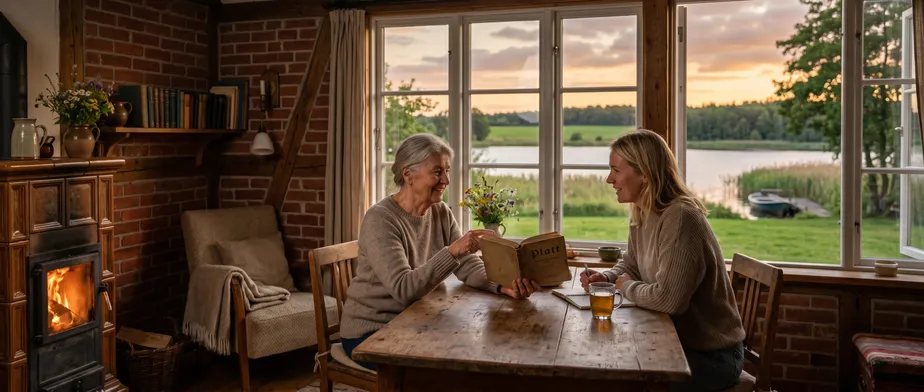
Dialects stir emotions. For some, they mean home, memories and a sense of belonging. For others, they seem unfamiliar, old-fashioned or hard to understand. All the more reason to take a closer look at the dialects in Mecklenburg-Vorpommern. Here, Low German is not only part of history but still shapes the cultural identity of the region today.
When people talk about regional language in the north, one word comes up quickly: Platt. This refers to Low German, the linguistic foundation of many dialects in Mecklenburg-Vorpommern. Unlike in some other parts of Germany, the regional variants here do not differ dramatically from one another. Across the entire East Low German area, many similarities can be heard.
Why dialects are becoming rarer
The decline of dialects in many places has several causes. In everyday life, Standard German is spoken much more often than in the past. Media, school, work and digital communication promote a way of speaking that is understood everywhere. High mobility also plays an important role. People who move house, commute or move between different social environments often adapt their language.
As a result, dialects are used less in daily life. They do not necessarily lose their value, but they lose their fixed place in everyday communication. This also applies to Mecklenburg-Vorpommern. Low German is still present, but it is no longer passed on as naturally from one generation to the next everywhere.
Low German, regiolect and Missingsch
Between pure dialect and clear Standard German there are intermediate forms. This is where it becomes interesting. Many people no longer speak a strong dialect, yet their speech still carries regional features. This so-called regiolect is Standard German with an audible local flavour.
In Mecklenburg-Vorpommern, people also often talk about Missingsch. This is a blend of Standard German and Low German. It often sounds more familiar and easier to use in everyday life than a consistently spoken dialect. It shows that regional language does not simply disappear but changes over time.
Why Low German is more than just language
Low German is part of the region’s cultural memory. It carries everyday life, humour, ways of thinking and local characteristics. Those who listen to Platt often also encounter a certain attitude: direct, down-to-earth and close to daily life. At a time when many things feel interchangeable, a regional language can strengthen identity.
This does not mean that everyone has to speak fluent Platt. Even understanding a few words, idioms or sound patterns creates a sense of closeness to the region. For visitors, this can be part of the appeal of a stay in Mecklenburg-Vorpommern. Language then becomes part of the holiday experience, just like landscape, food or traditions.
Between preservation and change
Dialects only live on when they are spoken. At the same time, language change is completely normal. The fact that mixed forms are often heard today is not only a sign of loss but also of adaptation. Low German is changing, yet it remains recognisable as the cultural voice of the region.
Anyone who visits Mecklenburg-Vorpommern or lives here encounters this voice sometimes clearly, sometimes only in subtle nuances. That is what makes the dialects so fascinating. They are not just relics of the past but a living part of regional culture that still resonates today.
More articles
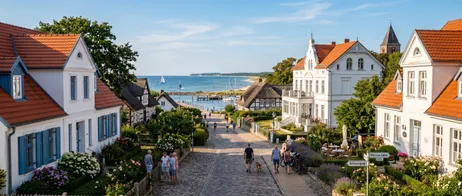
Discover Architecture and Design in Mecklenburg with Style
Discover the typical architecture of Mecklenburg: white houses, manor houses, farmhouses and coastal villas set among avenues, lakes and the Baltic Sea coast.
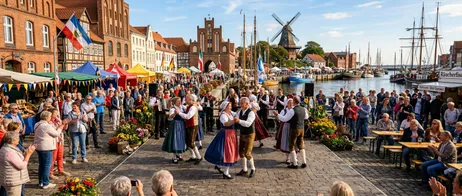
Experience Traditions and Festivals in Mecklenburg
Experience traditions and festivals in Mecklenburg: harbor festivals, craft markets, music, regional cuisine and living customs in coastal towns and rural villages.
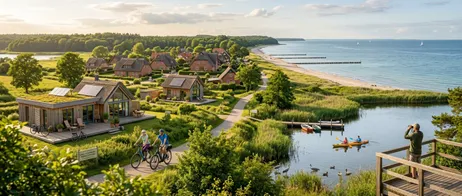
Experience Sustainable Tourism in Mecklenburg Consciously
Mecklenburg inspires with sustainable tourism, nature-based holidays and eco-friendly activities between the Baltic Sea, lakes and forests.

Experience the birdlife of Mecklenburg-Vorpommern in autumn
In autumn, Mecklenburg-Vorpommern becomes an important resting and wintering area for migratory birds. Experience cranes, wild geese and rare species and learn why the region is so important for bird conservation.

Experience Crane Season in Mecklenburg-Vorpommern
Around 150,000 cranes rest between the Baltic Sea and the lake district until the end of October. Why Mecklenburg-Vorpommern is now a special destination for nature observation.

Discover Local Producers in Mecklenburg
Discover local producers in Mecklenburg and enjoy regional specialties, farm shops and manufactories around your holiday home.
